Product catalog
Read the ZHR-P60 catalog page with electrical, mechanical and operating data.
Open ZHR-P60 catalog page ↗Integrated motion · Planetary joint series
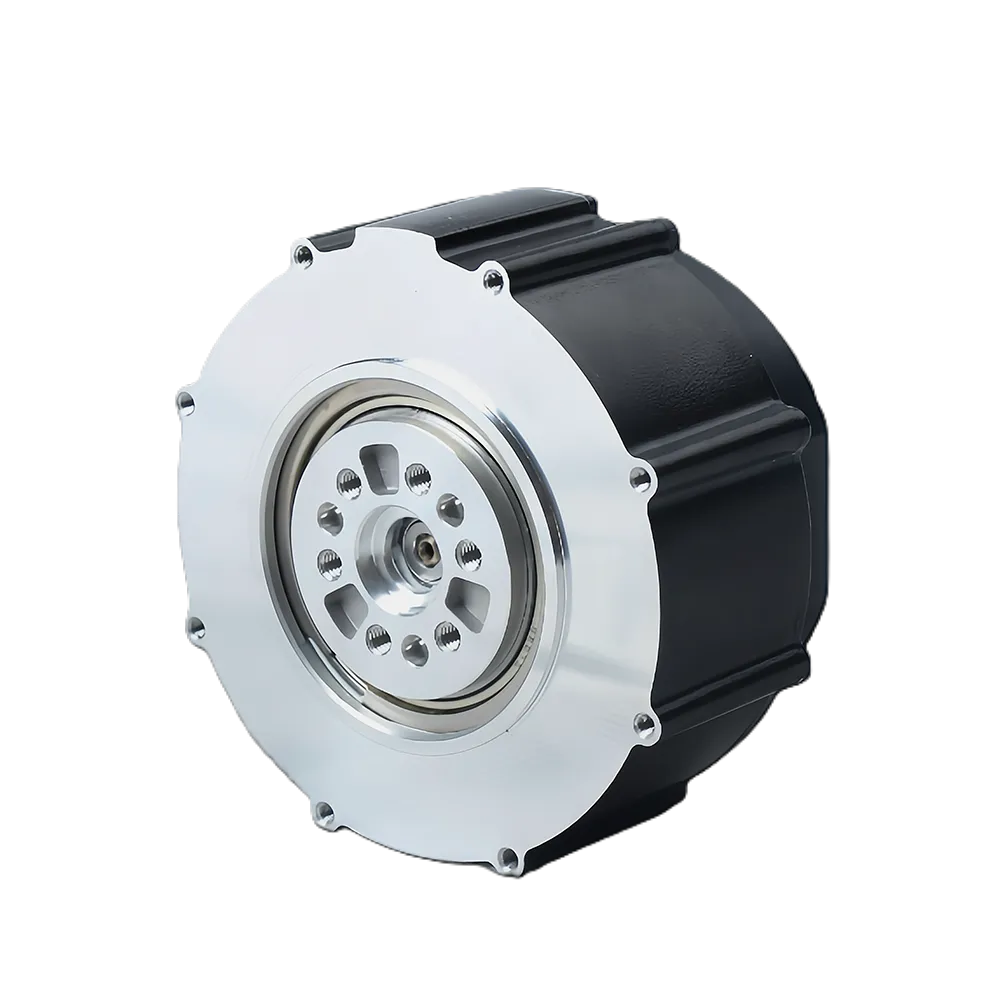
ZHR-P60 combines a planetary transmission and servo drive in a robot joint module with 20 Nm rated torque and 60 Nm peak torque. Explore the actual product, mounting drawing and detailed specifications below.
Model-specific configuration review · Direct engineering contact
Quick answer: consider ZHR-P60 for compact dynamic motion where the mechanical envelope and application conditions fit the selected model. Validate the complete duty cycle, mechanical envelope and interface with engineering before release.
ZHR-P60 sits between ZHR-P36 and ZHR-P120 in the published torque range. Compare its 20 Nm rated and 60 Nm peak torque with your load requirements rather than selecting by the model number alone.
Encoder, backlash and communication configuration are model-specific. ZHR-P60 is CAN only and does not support native EtherCAT.
Torque values are model-specific. Confirm the duty cycle, thermal conditions, interface and mechanical drawing before design-in.


Select an image to inspect the original product photograph in a new tab.
Review the model parameters below. Download the catalog for complete technical documentation and configuration details.
Download Catalog (PDF) ↓| Parameter | Published value |
|---|---|
| Rated torque | 20 Nm |
| Peak torque | 60 Nm |
| Weight | 900 g ± 20 g |
| Reduction Ratio | 9 : 1 |
| Drive Method | FOC |
| Encoder Type | Magnetic Encoder (2 pcs) |
| Rated Voltage | 48 V |
| Operation Voltage Range | 15 - 60 VDC |
| Rated Output Power | 210 W ± 10% |
| No-load Speed | 195 rpm ± 10% |
| Rated Load Speed | 100 rpm ± 10% |
| Rated Load Phase Current | 13 Apk ± 10% |
| Peak Phase Current | 43 Apk ± 10% |
| Communication interface | CAN only; native EtherCAT not supported |
Communication boundary: Communication: model-specific; contact engineering to confirm the interface before design-in. ZHR-P60 is CAN only and does not support native EtherCAT.
Inspect the model-specific mounting interfaces before designing the mating parts.

Use the series specification page for the current public drawings and data. Request model-specific documents, configuration confirmation and quotation with your application conditions.
Read the ZHR-P60 catalog page with electrical, mechanical and operating data.
Open ZHR-P60 catalog page ↗Check the current series documentation alongside the model drawing and comparison data.
View series spec sheets →Ask for the current ZHR-P60 STEP model, interface confirmation and quotation for your configuration.
Request engineering review for ZHR-P60 →Compare published ratings first, then validate speed, packaging and controls. Weight alone does not determine application suitability.
| Model | Rated torque | Peak torque | Weight | Model page |
|---|---|---|---|---|
| ZHR-P05 | 1.6 Nm | 5.5 Nm | 191 g | View model details |
| ZHR-P14 | 5 Nm | 14 Nm | 310 g ± 3 g | View model details |
| ZHR-P17 | 6 Nm | 17 Nm | 380 g ± 3 g | View model details |
| ZHR-P36 | 11 Nm | 36 Nm | 621 g | View model details |
| ZHR-P60 | 20 Nm | 60 Nm | 900 g ± 20 g | Current model |
| ZHR-P120 | 40 Nm | 120 Nm | 1420 g ± 20 g | View model details |
The public ZHR-P60 documentation specifies CAN with no native EtherCAT. CAN FD support, CANopen support and compatibility with any specified EtherCAT-to-CAN gateway are not publicly verified by the documentation provided here. This evidence gap does not establish hardware impossibility; request written confirmation for the exact model, firmware, controller and gateway configuration before design-in.
Encoder evidence is model-specific: P60 lists two magnetic encoders. P17 has a 36 V single-encoder configuration and a 48 V dual-encoder configuration. These are not a family-wide dual-encoder specification. Check the selected model and configuration rather than extending one model's specification to all ZHR-P modules.
Check available model documents and request protocol evidence
ZHR-P60 is listed at 20 Nm rated torque and 60 Nm peak torque. Peak torque is not a continuous operating rating. Confirm allowable peak duration, duty cycle and thermal conditions with engineering.
The catalog lists 48 V rated voltage. Check the operating voltage range and power supply requirements in the specification table before integration.
CAN only; native EtherCAT not supported
Use the model-specific dimensional drawing on this page and the linked specification catalog for initial layout. Request the current ZHR-P60 STEP model and configuration confirmation through the engineering RFQ link before releasing your mechanical design.
ZHR-P60 sits between ZHR-P36 and ZHR-P120 in the published torque range. Compare its 20 Nm rated and 60 Nm peak torque with your load requirements rather than selecting by the model number alone.
Share your required torque and speed, duty cycle, supply voltage, control interface and target quantity. Your inquiry carries the ZHR-P60 reference so the engineering team can review the intended configuration.