Deep-dive articles on actuator selection, performance analysis, and real-world applications. Written by ZHR Motor's engineering team to help you make informed decisions.
Selection guide for all-in-one robot joint actuators. Compare DIY BLDC stacks, smart servos, CyberGear and ZHR integrated servo joint modules.
Compare smart servos, CyberGear, DIY BLDC stacks and ZHR servo joint modules by torque, protocol, encoder, voltage and size.
Learn when CyberGear is enough and when to move to higher-torque ZHR-P servo joint modules with industrial bus options.
Learn when quasi-direct-drive actuators fit humanoid hips, knees, and ankles. Covers gear ratio, reflected inertia, backdrivability, shock load, torque control, and ZHR-P selection.
Engineering guide to backdrivable actuators for exoskeletons, humanoid legs, and cobots. Covers mechanical transparency, reflected inertia, gear ratio, and ZHR-P selection.
Compare servo motors vs stepper motors for robot joints: torque-speed characteristics, closed-loop vs open-loop control, BLDC advantages, application guide, and cost analysis for humanoid, cobot, and industrial robots.
Complete engineering reference for strain wave gear actuators. Zero-backlash performance, 30-39 Nm/kg torque density, reduction ratios, ZHR-H specs, and harmonic vs planetary selection.
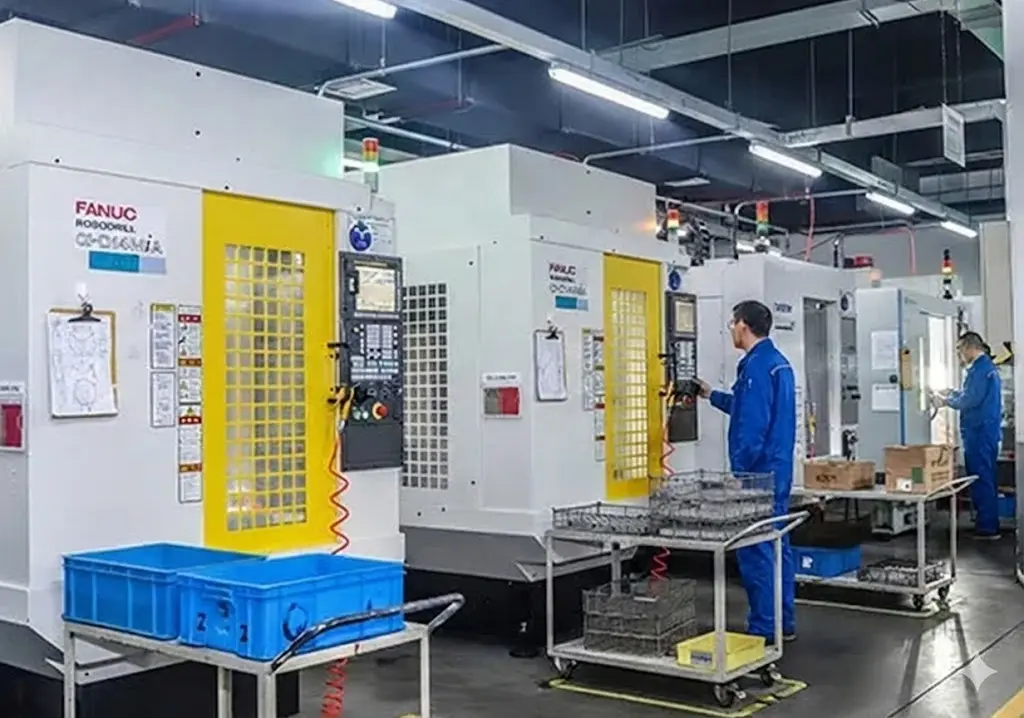
ISO 9001 certified manufacturer since 2015. 2-4 week lead time, flexible MOQ, in-house CNC & cleanroom, 6-stage testing, custom engineering, global shipping to 15+ countries.
Find the right harmonic joint motor supplier for your robot. Compare ZHR Motor's capabilities with industry benchmarks for OEM customization, lead times, MOQ, and quality assurance.
A complete 5-step framework for selecting humanoid robot actuators. Includes torque calculation methods, harmonic vs planetary decision matrix, and joint-by-joint recommendations.
An honest, data-driven comparison of ZHR Motor, Harmonic Drive LLC, and Maxon across torque density, backlash, price bands, and total cost of ownership for robot integrators.
Design the right communication architecture for your robot arm. Compare single-protocol vs hybrid CANopen+EtherCAT designs with real-world cost and performance trade-offs.
Extend actuator lifespan with proper maintenance. Preventive schedules, harmonic vs planetary specific care, diagnostic methods, and troubleshooting for common joint failures.
Discover the actuator choices behind humanoid robots like Tesla Optimus. Compare harmonic vs planetary gearboxes, torque formulas, and ZHR alternatives.
A comprehensive buyer's guide for selecting harmonic reducer joint motors and robot joints tailored for collaborative robots. Achieve torque densities up to 36Nm/kg with <20 arcsec backlash.
A comprehensive buyer's guide for selecting planetary robot actuators and integrated joint modules customized for industrial robotics, humanoids, and exoskeletons.
A definitive breakdown of strain wave kinematics. Understand how the Wave Generator, Flexspline, and Circular Spline eradicate backlash in precision robotics.
Discover the anatomy of integrated humanoid actuators. Learn how engineers fuse frameless motors, zero-backlash reducers, and EtherCAT drivers.
A data-driven engineering guide analyzing the torque-to-weight ratio (Nm/kg) across leading robot joint actuator architectures including Harmonic, Planetary, and Direct Drive systems.
Learn why a zero backlash robot joint is critical for precision automation, cobots, and surgical applications, and discover how harmonic reducers eliminate mechanical play.
Full engineering reference for robot joint modules. Compare harmonic vs planetary specs: backlash, torque density (30-39 Nm/kg), efficiency, with joint torque reference for 6-DOF arms and a 4-question selection checklist.
9-parameter head-to-head: backlash <20 arcsec vs 3-15 arcmin, 96%+ efficiency vs 85-90%, 300% shock tolerance, lifespan, backdrivability. Includes the hybrid strategy used by advanced humanoid robots.
Engineering comparison of DIY frameless motor assemblies vs all-in-one joint modules. Discover the hidden costs $200-500+ engineering hours -and when each approach makes economic sense.
Learn the core causes of joint play, arcmin vs arcsec measurement tactics, and how zero-backlash harmonic reducers eliminate precision loss in robots.
Discover why zero-backlash harmonic reducers are essential for collaborative robots. A complete guide to understanding robot joint motors and actuators.
Master humanoid robot actuator torque density (Nm/kg). Learn how to calculate, optimize, and select the right joint motors for maximum performance. Expert guide on frameless motors, harmonic reducers, and integration design.
Discover why collaborative robots require zero-backlash actuators for force control and safety, and how harmonic reducers solve this challenge.
Master the selection of actuators for humanoid robots, cobots, and exoskeletons. Data-driven comparison of frameless vs housed motors.
Engineering guide on selecting high torque density joint motors for humanoid robots and cobots. Learn how to achieve up to 36Nm/kg with zero backlash.
Understanding Nm/kg ratio, industry benchmarks, calculation methods, and optimization strategies. The definitive reference for actuator performance metrics with product comparisons and testing guidelines.
In-depth case studies of ZHR actuators in collaborative robots and lower-limb exoskeletons. Real performance data, technical challenges, solutions, and ROI analysis from actual deployments.
Step-by-step guide: torque requirements by joint, reducer type, motor constant Km, control bandwidth, form factor—with a joint-by-joint selection table and ZHR product recommendations.
Terminological guide: "harmonic reducer", "harmonic drive", and "strain wave gear" all refer to the same technology. Explains the working principle, performance specs (<1 arcmin backlash, 30-40 Nm/kg), and when to choose it over planetary gears.
Mechanical transparency, quasi-direct drive topology, hip/knee/ankle torque specs for 75 kg users, and bandwidth requirements. With ZHR-P series selection table for industrial exoskeletons.
Data-driven comparison: EtherCAT (8000 Hz, <1 µs jitter) vs CANopen (500 Hz) vs CAN FD. Decision tree by axis count and bandwidth needs, plus ZHR-P and ZHR-H protocol compatibility table.
Complete guide to backlash (arcsec vs arcmin), compounding across joints, ISO measurement method, benchmarks by reducer type, and why strain wave gears achieve near-zero backlash (<20 arcsec).
Our engineering team provides free technical consultations to help you choose the right actuator for your application.
Schedule Consultation