Quick Answer
A micro linear actuator for a robotic hand should be selected around finger geometry, available cable path, stall tolerance, contact force, speed and heat. The best actuator is not always the strongest unit; it is the one that fits inside the finger or palm while delivering repeatable motion for many small cycles.
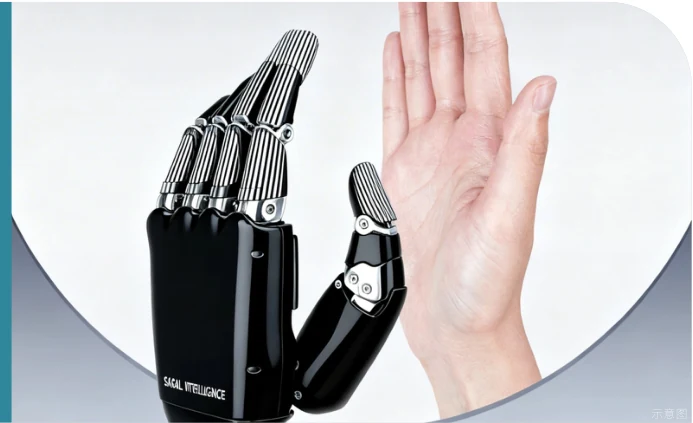
1. Why robotic hands are different from simple grippers
A two-jaw gripper usually has a clear motion path and a predictable load. A robotic hand has multiple short axes, changing cable bends, fingertip impacts, stall events, and tight thermal limits inside a palm or finger shell. This is why hand builders search for small electric cylinders, micro linear actuators, miniature servos and finger actuators at the same time.
2. Selection table for finger and thumb axes
| Hand axis | Primary requirement | ZHR starting point | Integration note |
|---|---|---|---|
| Finger flexion | Repeatable 10 mm travel and moderate contact force | DE Finger, 60 N rated / 120 N peak | Check cable motion through the finger joint and palm exit. |
| Thumb opposition | Compact package and controlled contact | DE Thumb, 50 N rated / 100 N peak | Leave room for crossed axes and mechanical stops. |
| Palm linkage | Short push-pull adjustment in a fixed envelope | FT folded or direct | Choose folded layout when motor length competes with the palm shell. |
3. Five checks before choosing the actuator
- Finger envelope: confirm actuator length, width, cable exit and mounting screws inside the CAD model.
- Contact force: size to normal grasp force, then validate peak events separately.
- Stall behavior: define what happens when the fingertip hits an object earlier than expected.
- Thermal margin: test repeated open-close cycles, not only a single stroke.
- Feedback and control: decide whether the hand needs position, force estimation, or both.
4. Direct-drive finger actuator or tendon-driven hand?
Tendon-driven hands can move mass away from the fingers, but they add routing, friction and calibration work. Direct micro linear actuators keep the motion path local and easier to assemble, but they must fit the finger or palm envelope. For many service robot and inspection hand prototypes, a small integrated actuator reduces early mechanical uncertainty.
FAQ
What is the best micro actuator for a robotic hand?
The best starting point is the smallest actuator that meets stroke, rated contact force, duty cycle, cable routing and feedback requirements. For ZHR, DE Finger and DE Thumb models are designed specifically around compact hand axes.
Is a stronger actuator always better for a robotic finger?
No. Excess force can increase weight, heat and impact risk. Robotic fingers usually need controlled, repeatable contact more than maximum force.
Designing a dexterous hand axis?
Send ZHR your finger CAD envelope, expected grasp force and duty cycle. We will help map DE or FT actuators to the mechanism.
View robotic hand application